2026
Funded Project, Jukebox, RaspberryPi, Media Player
My role: Electronics, Hardware, Software, Interaction Design
Collaborators: Rob St John, Tommy Perman.
Recordings gathered with Diane Muldowney & Michael Powell.
After Dark
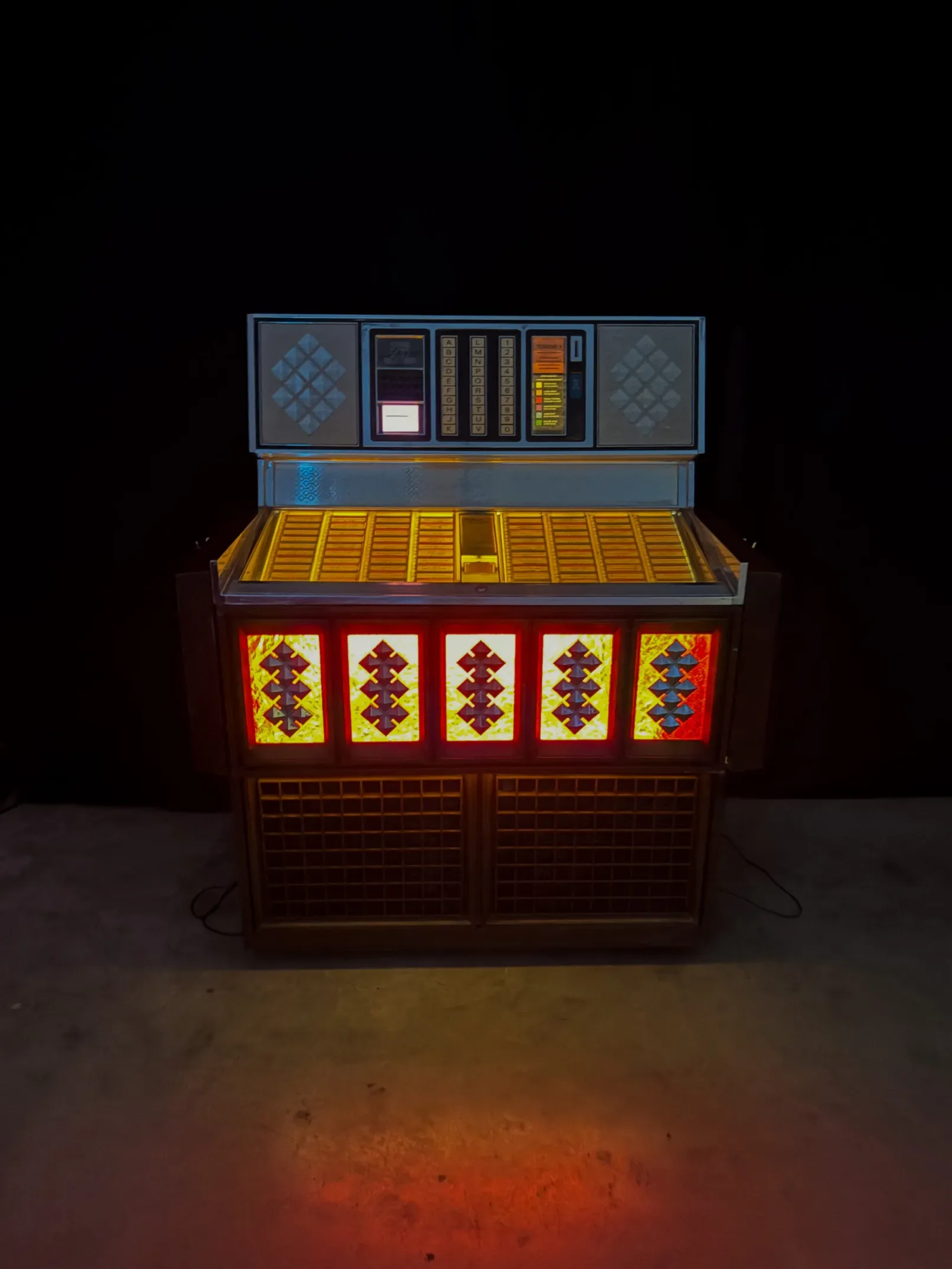
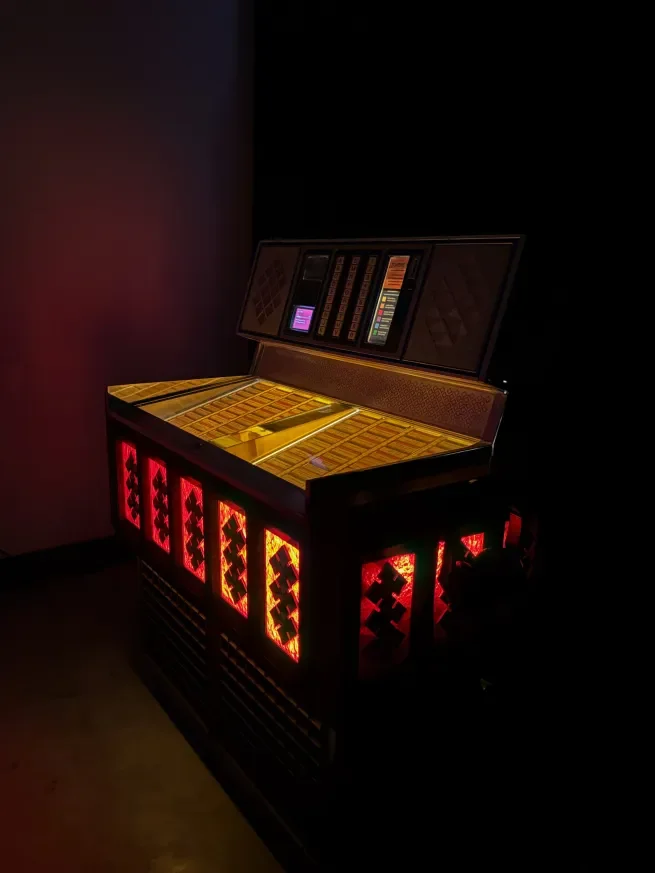
A restored 1970s jukebox installed in Nelson library, holding a hundred recorded stories of the town's nightlife from the 1950s to today.
The After Dark jukebox holds one hundred stories about nightlife in Nelson, from the 1950s to the present day.
The project was commissioned by the arts organisation In-Situ as part of This is Nelson, and made by artists Rob St John, Tommy Perman and Michael Shorter. The jukebox itself was found broken and covered in dust in the basement of 3B Systems on Every Street, below the room where the This is Nelson group meets. The trio have restored the 1970s machine and filled it with tales of nocturnal life in Nelson.
The recordings were gathered across 2025 and 2026 by Rob, with Diane Muldowney and Michael Powell, beginning with groups that already meet in the town and spreading by word of mouth. Fourteen were never collected at all: people had taped themselves, or left a VHS camera running on a last night of a club, and their recordings had sat in a drawer for years.
The stories cover the Beatles at the Imperial Ballroom and the afternoon in 1976 it burned down. Ballroom dancing lessons above a furniture shop. A back-street café with a jukebox that held Bollywood tunes and Stevie Wonder. Jimi Hendrix in the Bull with a bottle of bourbon, the morning after the Imp crowd booed him off. A boy of ten sneaking out to the wrestling. The last night of the Tackler's Club, decades after the mills they served had gone. Northern soul in a Methodist youth club. DIY punk at the Railway Workers Club. A rave in a Lomeshaye warehouse that drew ten thousand people, produced a hit record and ended at dawn with a police raid. A helpline for gay men and women run from a rented room. Ghost stories from the ginnels. Ramadan, when nobody sleeps. Fires and stargazing on the hill where the streetlights stop and Pendle starts.
Taken together they are about more than nightlife. They are a record of what people here have built for themselves when nothing was built for them, and how often those places were lost again: to fire, to closure, to the price of the ground they stood on. They are also about this valley. The canal that carried coal and cotton, the moor that had to be fought for, the dark sky above a lit town.
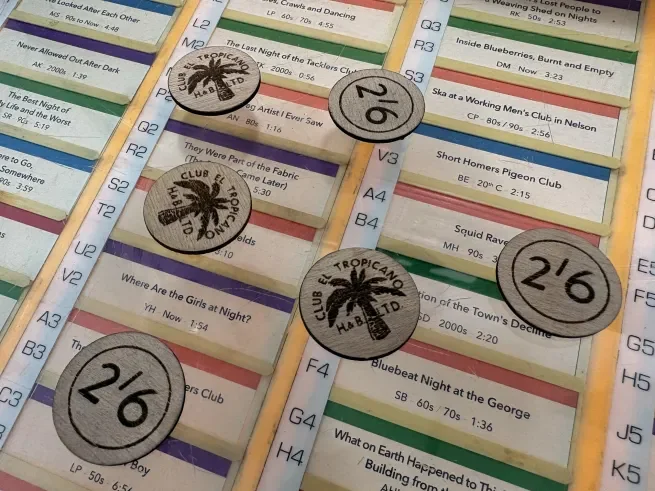
These ideas are built into the machine. The recordings fall into six kinds of night: the big nights at the Imp, clubs and pubs, fear and folklore, identity and belonging, community and change, and what has been lost or might come next. None are grouped together, encouraging jukebox users to wander across eras and themes.
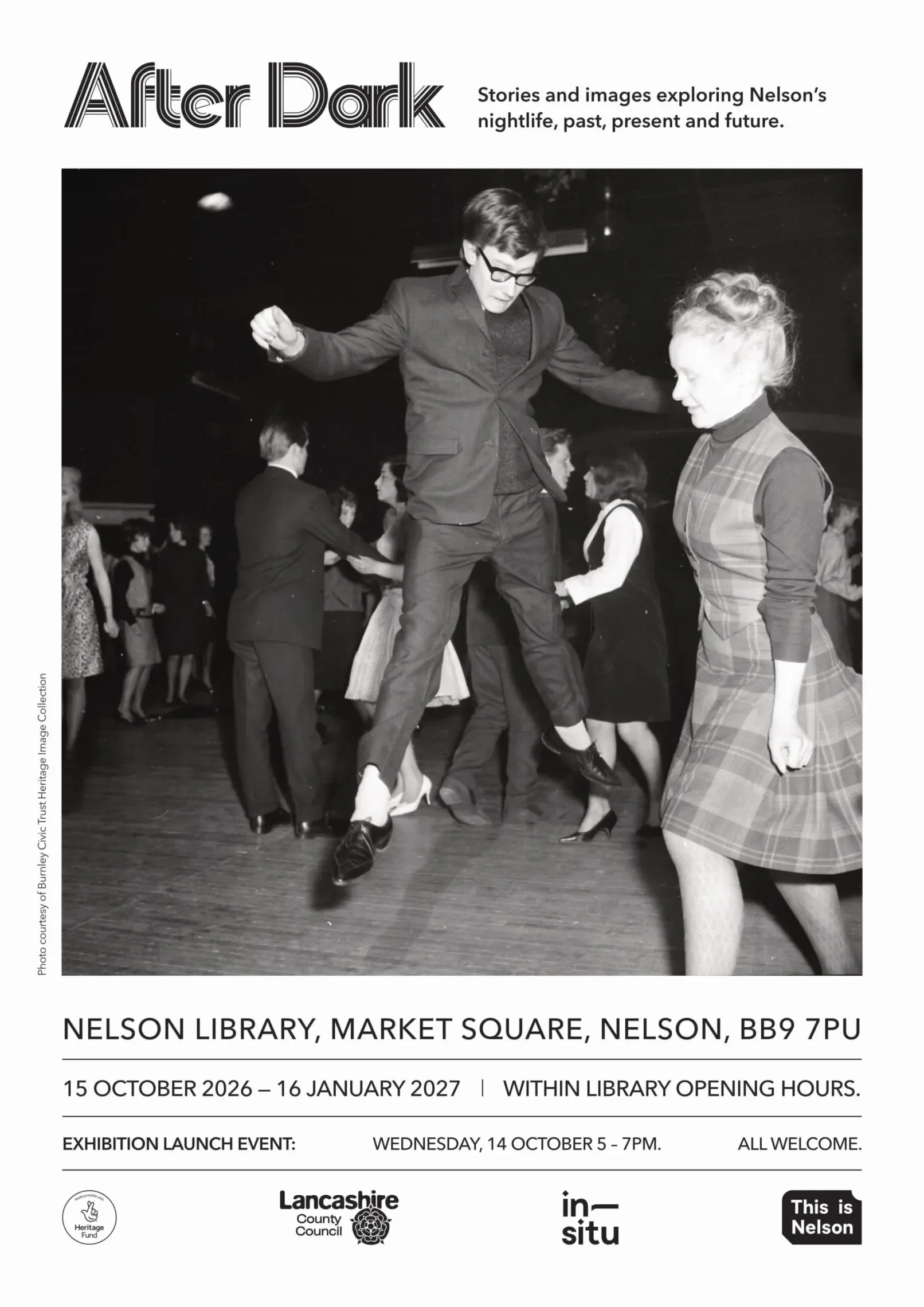
The jukebox is free to use during library hours. It runs on free, reusable tokens etched with the design of the gambling chips from the casino above the El Tropicano club, shared by contributors to the project. It is installed alongside an exhibition of Diane Muldowney's photographs of the places the recordings describe, many of them now ruined or gone.
After three months in the library the jukebox moves to the community space above 3B Systems, to be used, added to and reshaped through new commissions with young people in the town. After Dark is not a finished archive, it is a living one.
Read transcripts of the 100 stories online.
Further information
2025–27. Commissioned by In-Situ as part of This is Nelson. Funded by the National Lottery Heritage Fund, supported by Lancashire Archives. Restored 1970s jukebox, free reusable tokens, 100-story audio archive.
Collaboration
My role: [FILL IN — restoration/hardware is a natural fit given the rest of your site, but the copy as written doesn't break out who did what across the trio]
Collaborators: Rob St John, Tommy Perman. Recordings gathered with Diane Muldowney, Michael Powell. Exhibition photography: Diane Muldowney.